
Picture this: a batch of 500 ring-shaped precision components—each one anodized to exacting tolerances, each one destined for a high-value assembly line—arrives at the customer’s incoming inspection station. Within minutes, 75 parts are flagged and set aside. Micro-scratches on the treated surface. Fine dust particles bonded by static charge. Residue transferred from one part to another during transit. The batch yield drops to 85%, and nobody touched these parts with anything but gloves. The damage happened inside the packaging itself.
This scenario is far more common than most engineers realize. Industry data suggests that up to 15% of precision parts with surface treatments are rejected before they ever reach the assembly stage—not because of manufacturing defects, but because of packaging-induced damage during handling and transport.
Three Threats Hiding in Every Package
Precision components with anodized, plated, or coated surfaces face three distinct categories of damage that conventional packaging simply was not designed to prevent:
1. Static Dust Adhesion (ESD). Untreated packaging materials generate triboelectric charge during handling and vibration. This charge attracts airborne particles—dust, fiber fragments, micro-debris—that bond electrostatically to treated surfaces. Once adhered, these particles resist standard cleaning and can cause defects in downstream processes such as bonding, sealing, or optical alignment.
2. Surface Micro-Scratches. When parts shift inside packaging during transit, even minor contact with hard plastic walls or adjacent components creates micro-scratches invisible to the naked eye but easily detected under magnification. For parts with precision surface treatments—especially those used in optical or sensor applications—a single scratch means rejection.
3. Cross-Contamination Between Parts. Parts stored in loose or semi-constrained configurations inevitably contact each other. Coating residues, metallic particles, and surface oils transfer between components, compromising cleanliness specifications and introducing foreign material into the assembly environment.
Why Standard Packaging Falls Short
The root cause is a mismatch between the packaging and the product’s actual protection requirements. Generic polyethylene or polyurethane foam lacks inherent ESD dissipative properties, meaning it actively contributes to static charge buildup. Thermoformed plastic trays offer rigid positioning but present hard, non-cushioning surfaces that can mark delicate coatings on contact. Loose packing methods—bags, wraps, divider cards—allow free movement, guaranteeing part-to-part contact under any transport vibration.
None of these approaches address all three threat vectors simultaneously. And that’s exactly where the cost accumulates.
The Business Impact: More Than Just Scrap
Rejected parts rarely go straight to the waste bin. More often, they enter a costly rework cycle: re-cleaning, re-inspection, and in many cases re-coating or re-plating. Each rework cycle adds cost, consumes production capacity, and extends lead times. For precision instrument manufacturers operating on tight delivery schedules, even a single batch rejection can cascade into missed commitments, premium freight charges, and—most damaging of all—erosion of customer trust that took years to build.
The Solution Framework: A Systems Approach to Anti-Static Packaging

Eliminating packaging-induced defects requires addressing material, geometry, and electrostatic protection as an integrated system:
Material choice matters. XLPE (cross-linked polyethylene) foam delivers a unique combination of closed-cell cushioning, chemical inertness, and inherent ESD dissipative performance (surface resistivity 10⁴–10⁹ Ω). Unlike conventional foams, XLPE does not shed particles or off-gas contaminants—critical for parts with treated surfaces.
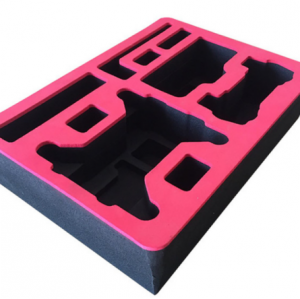
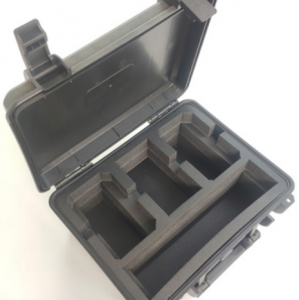
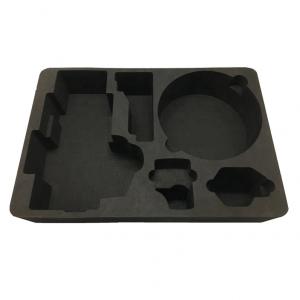
Custom cavity and groove design. CNC-machined foam inserts are programmed to match each part’s exact geometry within ±0.5mm. Ring-shaped precision components sit in purpose-cut grooves that eliminate all lateral and vertical movement, preventing part-to-part and part-to-wall contact entirely.
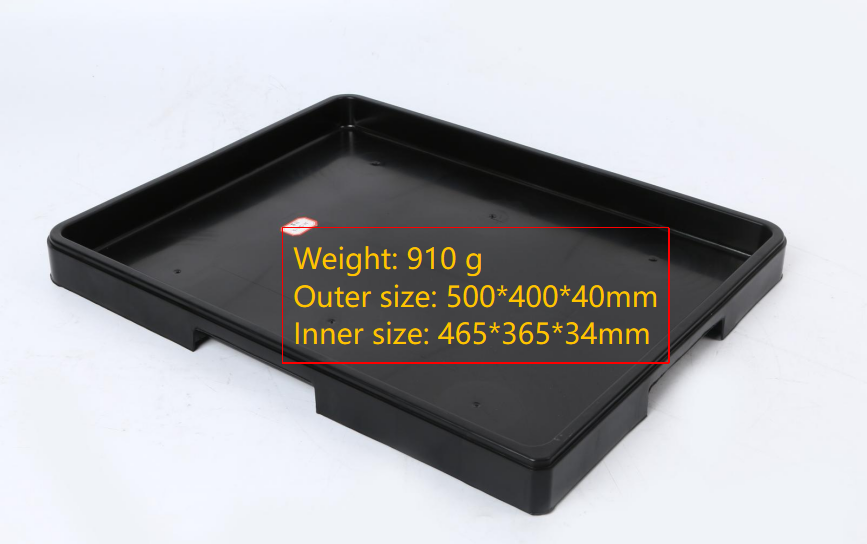
Full ESD chain integrity. True ESD protection requires continuity from the outermost container to the part contact surface. This means pairing conductive or dissipative injection-molded trays with ESD-grade XLPE foam inserts, creating a complete Faraday-cage-like environment that prevents both charge generation and external discharge events.
Real-World Validation
A European precision instrument manufacturer had been experiencing a 12–18% incoming rejection rate on anodized ring-shaped components due to surface contamination and micro-scratches. After switching to CNC-machined XLPE foam inserts housed in ESD injection-molded trays, the surface defect rate at incoming inspection dropped to zero. The total packaging cost per part increased marginally, but the elimination of rework, re-inspection labor, and delivery delays produced a net cost reduction within the first quarter.
Key Takeaway
Precision parts packaging is not a commodity decision. When components carry high-value surface treatments, the packaging system must deliver anti-static packaging performance, dimensional precision, and soft non-abrasive contact simultaneously. XLPE foam inserts machined to exact part geometries, combined with ESD-rated trays, represent the current best practice for eliminating surface treatment packaging defects at their source. The hidden cost of inadequate packaging is never hidden for long—it shows up in every rejected part, every rework order, and every difficult conversation with a customer expecting perfection.